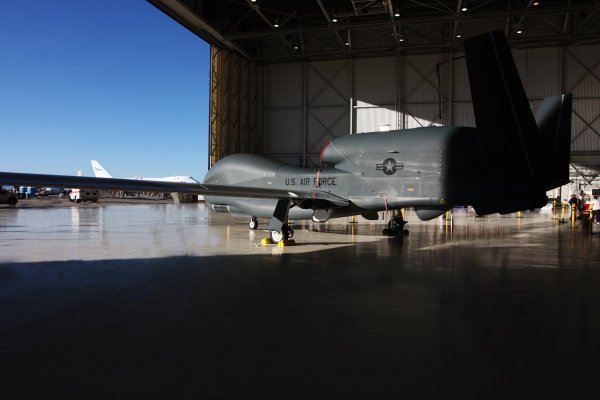
A US Army RQ-7Bv2 Shadow drone lost all communications with its ground control station shortly after launch in southern Arizona in late January 2017 and continued flying autonomously for 632 miles across three states before crashing near Denver, according to an account of the incident. The drone, which was participating in a simple exercise, was tracked by radar for about five hours until it reached the Rocky Mountains, where its radar signature disappeared and officials assumed it had gone down.
Instead, the drone climbed to roughly 12,000 feet and cleared the mountain range, conditions and distances for which it was not designed. It was not recovered until it crashed near Denver; the cause of the crash has not been confirmed, though the account suggests it likely ran out of fuel. The Shadow is normally used for surveillance and is unarmed, but the incident raises questions about what could happen if a similarly malfunctioning armed drone—such as a Predator carrying Hellfire and Griffin missiles—were to fly uncontrolled over populated areas.
Why the Shadow Kept Flying
Shadow drones are built with a degree of autonomy that allows them to remain airborne and continue a mission if they lose contact with an operator. Standard emergency protocols would typically direct the aircraft to circle, land, or return to its launch point. In this case, those systems either failed or did not activate as intended. One unconfirmed speculation is that the drone's memory contained coordinates for a former home base in Washington state and it attempted to return there. No official explanation has been provided for the malfunction.
The Bigger Debate Over Autonomous Weapons
The episode illustrates a broader concern: autonomous systems can behave unpredictably when bugs occur, and the consequences may be more severe when those systems are armed. The Future of Life Institute released an open letter around a year and a half before the incident urging a ban on autonomous weapons in war; more than a thousand AI researchers had signed it at the time. The source account doubts that governments will be deterred from deploying such systems, noting that nuclear proliferation was not halted either. The crash near Denver remains a reminder of the gap between programmed intentions and real-world outcomes.


Editorial Notes