A three-year Georgia Tech study led by engineering and biology professor David Hu used a human volunteer as bait to map how mosquitoes choose their prey, generating data from 20 million individual mosquito flights. The research, described by Hu in the Conversation, found that the insects alter their flight behavior depending on whether a target is visual, chemical, or both.
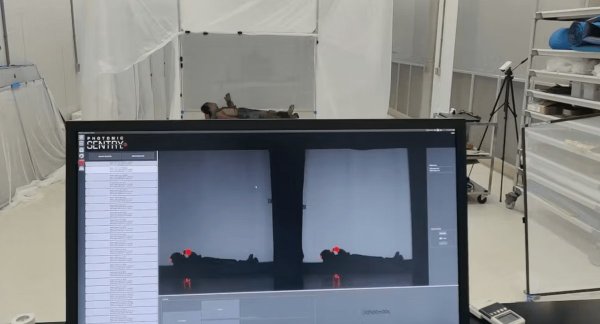
Chris Zuo, then a student, stood inside a chamber filled with 100 mosquitoes for the initial experiment. A mesh suit failed to keep the insects off his skin, resulting in what Hu called a “full-body massacre.” Zuo later became a graduate student and switched to a long-sleeved shirt washed with unscented detergent, gloves, and a face mask. He and fellow student Soohwan Kim then stood in the chamber while a photonic sentry camera provided by the US Centers for Disease Control and Prevention tracked flight paths at 100 frames per second.
The trials produced what Hu describes as more mosquito flight data than had previously been measured in human history. Mosquitoes with no target wandered aimlessly. A purely visual target, such as a styrofoam ball on a stick, prompted a fly-by. A target emitting carbon dioxide triggered a double-take maneuver. When a visual target and CO2 emission were combined—as with Zuo, a warm-blooded organism—the mosquitoes entered a frenzied orbit.
Over the study period, Hu and his team successfully predicted which areas of Zuo’s body were most prone to attacks. Hu framed the work as a “first step toward outsmarting them.” Mosquitoes cause more than 700,000 deaths annually by spreading diseases such as malaria, according to Hu.






Editorial Notes