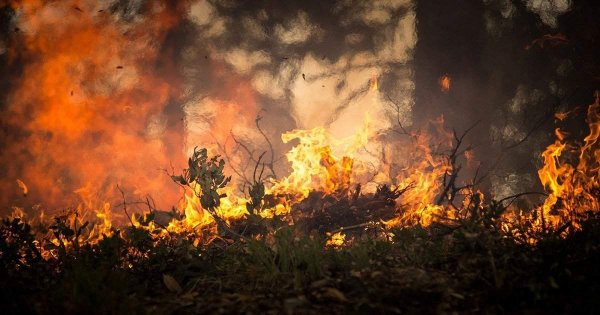
Tens of millions of years ago, a warming planet experienced global forest fires that burned even wet, humid regions, destroying 30 to 40 percent of the world's forests over a 100,000-year period, according to research published Tuesday in the journal Nature Geoscience. The University of Colorado Boulder scientists behind the study say the same conditions are re-emerging today.
The ancient fires were fueled by two factors that mirror modern trends: greenhouse gases from burning fossil fuels heating the planet, and organic runoff from fertilizers accumulating in oceans and rivers, leading to harmful algae blooms and carbon buildup. These conditions 90 million years ago suggest that current climate change could lead to similar global infernos.
“It highlights that putting carbon dioxide into the atmosphere and nutrients into the ocean doesn’t just potentially increase global temperatures,” lead author Garrett Boudinot said in a press release. “It has significant impacts on the fundamental biogeochemistry or ecology of the planet, like how forests respond to fire.”
While the world is currently experiencing a record-breaking wildfire season, most fires are in already arid areas. Rainforests are not spontaneously combusting. But unless climate change is slowed and reversed, the study warns, humanity could face a future where an ever-growing swath of the planet is coated in flames.






Editorial Notes