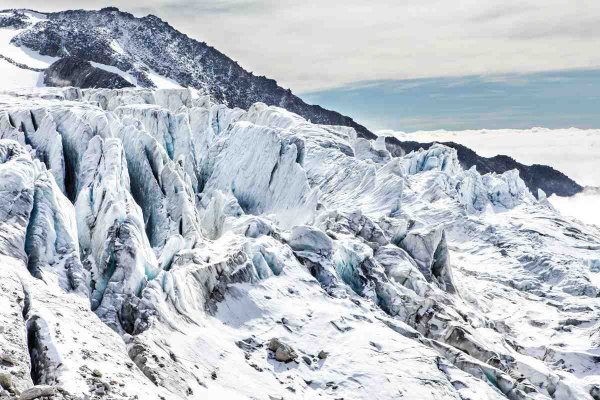
A new study published in Geophysical Research Letters finds that increasing snowfall in East Antarctica may reduce ice melt, potentially slowing sea level rise. The research, led by NASA scientist Brooke Medley, reconstructed 2,000 years of snowfall patterns using a 500-foot ice core extracted from Queen Maud Land.
Medley told Scientific American that there is a “balancing act, or a tug of war between the two processes,” referring to what scientists call mass balance: as ice melts, water evaporates and returns as snow. The study suggests that as global temperatures rise, more moisture in the air leads to increased snowfall, which could offset some ice loss.
[IMG_1]
However, the idea that this snowfall reduces ice melt remains contested. Anders Levermann, a climate scientist at the Potsdam Institute for Climate Impact Research who was not involved in the study, noted that snow falling on thin floating ice sheets can push them down, steepening slopes and causing faster ice flow into the ocean, which would exacerbate sea level rise.
Jonathan Bamber, a glaciologist at the University of Bristol, added that the impact depends on location. In Greenland, where temperatures are rising rapidly, snow falls as larger crystals that absorb more light, increasing melting. Bamber told Scientific American that “how you tell [the story] really does depend on where you are on that temperature curve.”
While the study provides insight into past snowfall patterns, scientists caution that drawing conclusions about future sea level rise is difficult. What remains clear, according to the source, is that climate change is causing ice to melt at a rate that any mitigating factor is unlikely to significantly counteract.





Editorial Notes