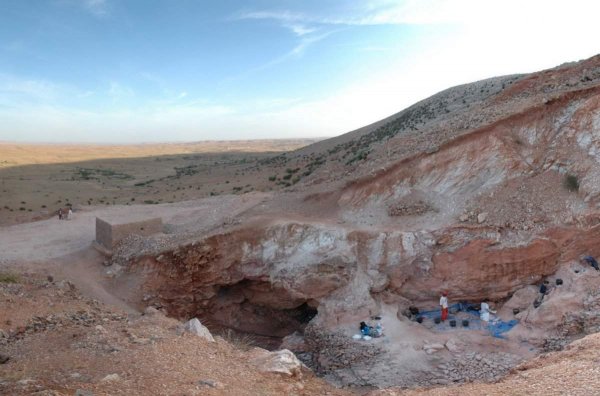
Scientists reported Wednesday the discovery of the oldest known remains of Homo sapiens at Jebel Irhoud in Morocco, dating back approximately 300,000 years. The find pushes the earliest confirmed human fossils back by 105,000 years and challenges the long-held view that our species emerged in a single region of East Africa.
Until now, the oldest human fossils dated to 195,000 years and were found in Ethiopia. The Moroccan bones and other remains indicate that early Homo sapiens were present across the African continent much earlier than previously thought. According to paleoanthropologist Phillipp Gunz, a co-author of two new studies on the fossils, the evidence shows "we did not evolve from a single cradle of mankind somewhere in East Africa," as he told The New York Times.
The fossils also reveal a mix of modern and archaic features. While the faces of these early humans strongly resemble those of modern humans, their brain structure differed fundamentally from ours. This mosaic suggests that key human traits evolved at different times and places.
What the Jebel Irhoud Find Changes
The discovery shifts the origin story from a single East African population to a pan-African process. It implies that early Homo sapiens were already widespread across the continent 300,000 years ago, with populations interbreeding and exchanging traits over vast distances. The Jebel Irhoud site, located in present-day Morocco, now stands as the oldest known home of our species.
Researchers emphasize that the findings do not pinpoint a single birthplace but rather support a model of African multiregional evolution. The exact timeline and routes of early human migration within Africa remain open questions.






Editorial Notes