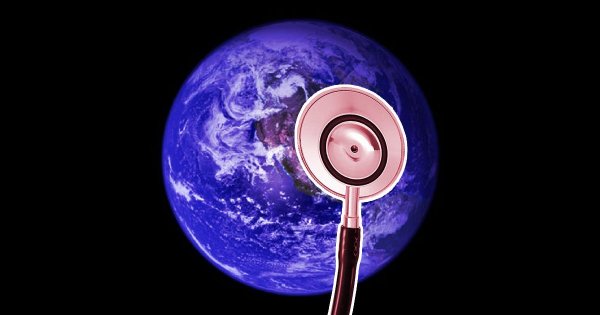
Six of Earth's nine planetary boundaries have been breached by human activity, leaving the planet "well outside the safe operating space for humanity," according to a new study published in the journal Science Advances. An international team of researchers conducted what they describe as the first scientific health check for the entire planet, drawing on more than 2,000 previous studies.
The planetary boundaries framework, defined by the Stockholm University Resilience Centre as the margins "within which humanity can continue to develop and thrive," includes categories such as biosphere integrity, climate change, ocean acidification, and land-system change. The assessment found that manmade pollution and environmental destruction have broken six of the nine systemic categories.
When the Boundaries Were Crossed
Some breaches occurred long ago. Biosphere integrity, considered a "core boundary" alongside climate change, was broken in the 1800s. The healthy boundary for freshwater systems was breached in the early 1900s, and the climate change threshold was crossed in the 1980s.
The most concerning finding, according to the assessment, is that all four categories dealing with the biological world were either at or close to the highest risk level.
Ozone Offers a Rare Bright Spot
Earth's atmospheric ozone remains within healthy confines. The finding is notable because the ozone layer was once at great risk of collapse, and human efforts to reverse that damage have proven effective.
Katherine Richardson, a professor at the University of Copenhagen who led the assessment, told The Guardian that the results do not mean humanity is doomed. She compared the planet to a person with high blood pressure: the study does not "indicate a certain heart attack," she said, "but it does greatly raise the risk."
Richardson also noted that humanity's impacts on the Earth system as a whole are increasing. "We know for certain that humanity can thrive under the conditions that have been here for 10,000 years," she told The Guardian. "We don't know that we can thrive under major, dramatic alterations."
Lowering the risk will require human action, the researchers indicate. The ozone layer's recovery stands as evidence that coordinated efforts can pull a boundary back toward safety.





Editorial Notes