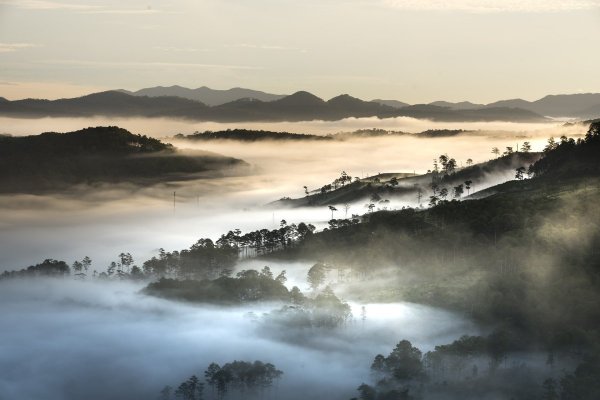
A biology professor at Sweden's Lund University has completed construction on a mesh curtain designed to block mist from reaching a patch of cloud forest in Peru, launching an experiment he says is the only one of its kind to simulate how rising clouds could affect tropical mountain ecosystems.
Dan Metcalfe began the project four years ago, motivated by climate models that predict clouds will be pushed higher into the sky as the planet warms. Cloud forests—rainforests found on tropical mountains typically between 2,000 and 3,500 meters above sea level—depend on the frequent mist and fog that bathe their vegetation. Metcalfe wanted to know what happens when that moisture is removed.
He selected the Wayqecha Biological Station, a cloud forest research center in Peru, and identified an area of approximately 873 square meters (9,400 square feet) for the study. In October 2017, after years of setbacks that nearly forced him to cancel the project, he finished building the mesh curtain that now intercepts mist before it reaches the study plot.
"This experiment is the only one of its kind," Metcalfe told Futurism. "It will provide the best immediate window into likely future impacts of climate change on the valuable ecosystem properties and services provided by cloud forests, from biodiversity refuges to regulating freshwater supply to storing carbon."
With preparations complete, the experiment is now entering its data-collection phase. Metcalfe said he hopes to publish a preliminary synthesis and experimental description by mid-2018, and he expects the first data within a few months.
"I expect that the forest might be quite slow to respond, but, of course, I don't know for sure because this has not been done before," he told Futurism.
If climate change does drive clouds higher, some plant and animal species in cloud forests could face extinction. Metcalfe's research is intended to help scientists and planners prepare for that possibility before it is too late.





Editorial Notes