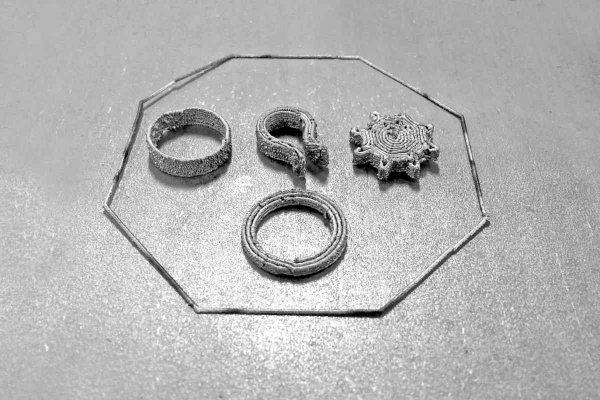
NVBOTS, a Boston-based 3D printing startup, has developed a method of printing metal parts that can use 21 different metals in the same job. CEO AJ Perez said the company's technology is the only one of its kind and described it as "ultra-high speed."
"At our core, NVBOTS is driven to turn ideas into realities, challenge the status quo and deliver on the impossible," Perez said. "Through the introduction of our ultra-high speed, multi-metal 3D printing technology, we are doing just that. And not only are we disrupting the 3D printing industry, we are solving the toughest problems in additional markets, such as the metal castings sector, which will have a significant impact on medical, automotive and aerospace industries, among others."
How the process differs from conventional 3D printing
Printing metal is difficult because the material must be heated to precise temperatures to melt, and metals conduct heat in ways that complicate layer-by-layer construction. NVBOTS' method uses electricity to melt metal wire, which Perez compared to a high-precision form of welding. The company says its proprietary control over the heat used for each "3-D pixel" of a printed part provides quality control not possible with other techniques.
The technology is still in development and can currently produce only small parts. For small, high-value stainless-steel and titanium components, Perez said the method is already a cheaper and more versatile alternative to casting. If production can be scaled up, NVBOTS says it could replace casting work in auto manufacturing, aerospace, luxury goods, and oil and gas.
Additive manufacturing's broader promise, according to Perez, includes the ability to print parts with unique properties that "you wouldn't be able to manufacture any other way," such as structural components for vehicles and aircraft, or parts for engines and electrical devices. Later this year, NVBOTS plans to launch a program allowing industrial partners to participate in research and development aimed at refining the process and expanding the materials palette.





Editorial Notes